🚚 Free Worldwide Shipping on All Orders!Shop Now
MODERNIST PRAXINOSCOPE - BLACK
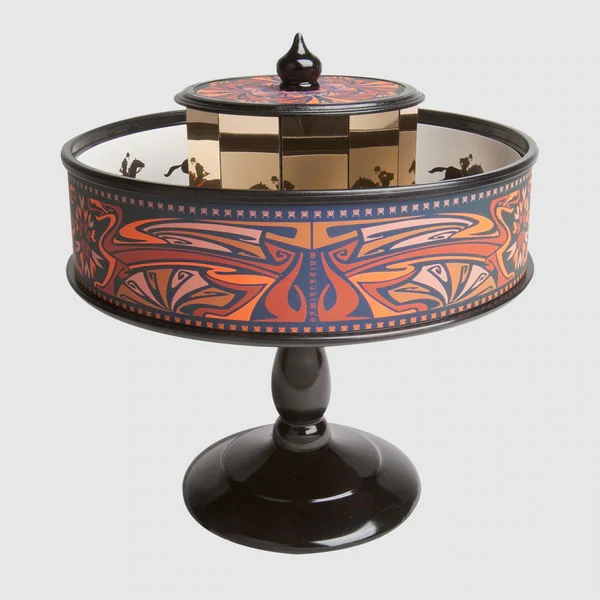
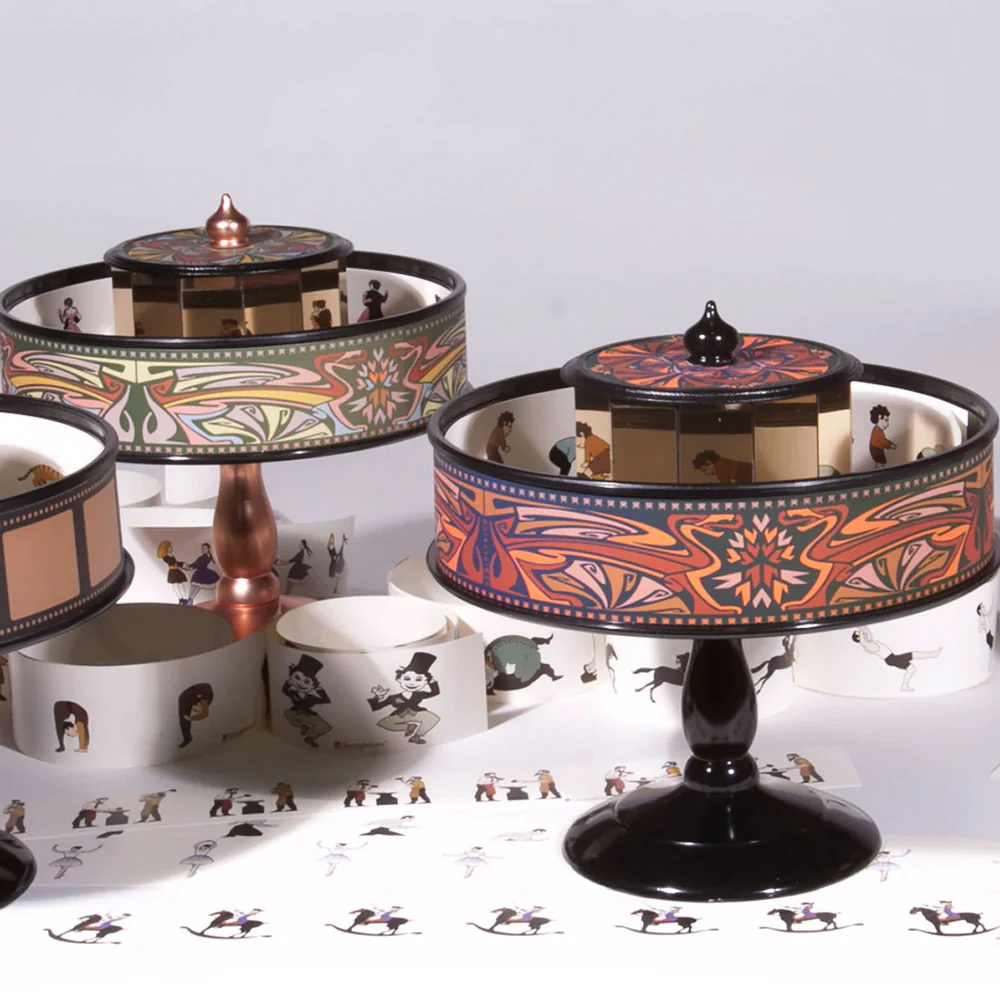
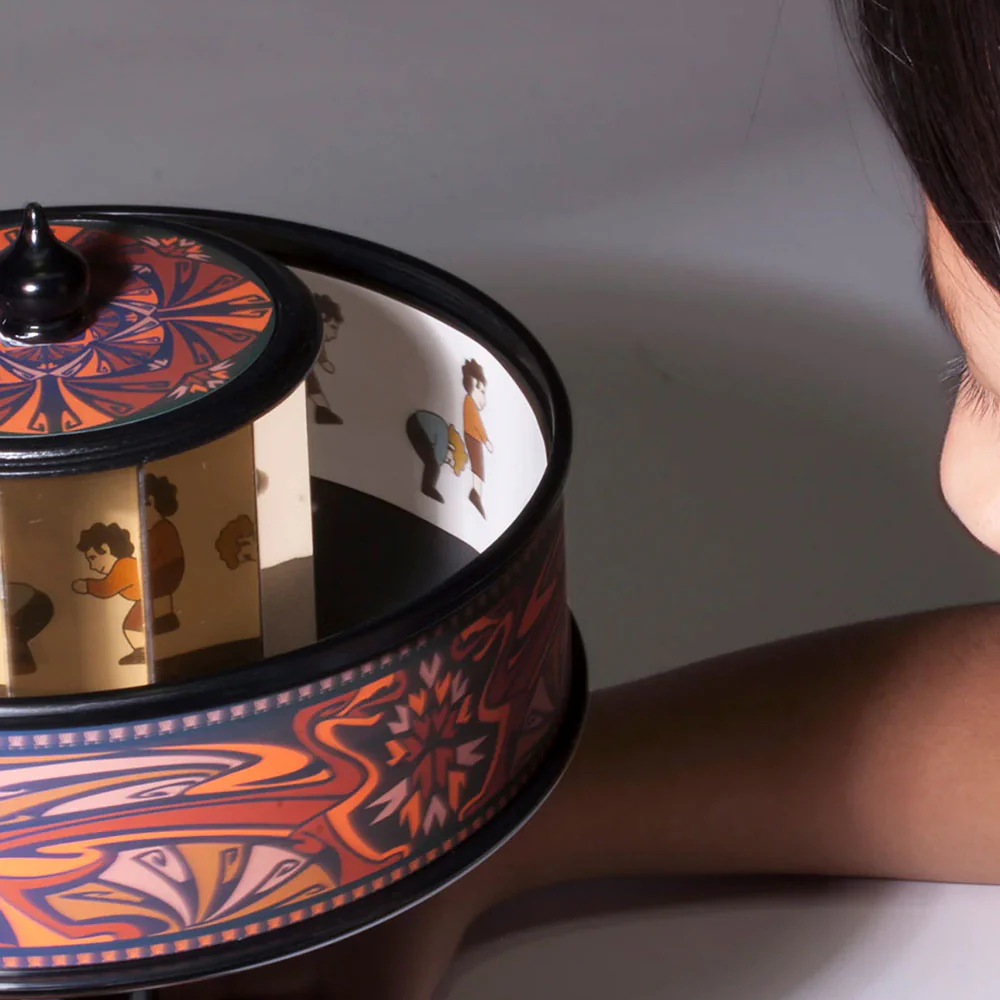
Optical Toy, Praxinoscope Miniature Reproduction - Transforms static images into a moving sequence, thanks to retinal persistence. A circular drum is rotated with mirrors in the centre of the drum reflecting images drawn on strips of paper placed around it. The spectator looks over the instrument and can thus observe an animation of a clear sequence, in which the images merge and the elements come to life.
Who invented the Praxinoscope?
Emile Reynaud patented it in 1877. Reynaud's (not "Raynaud"!) contribution made it possible to eliminate the distortion of the vision of moving images caused by the insufficient light received by the images of the Praxinoscope's predecessor: the Zootrope.
What are the main differences between the zootrope and the praxinoscope?
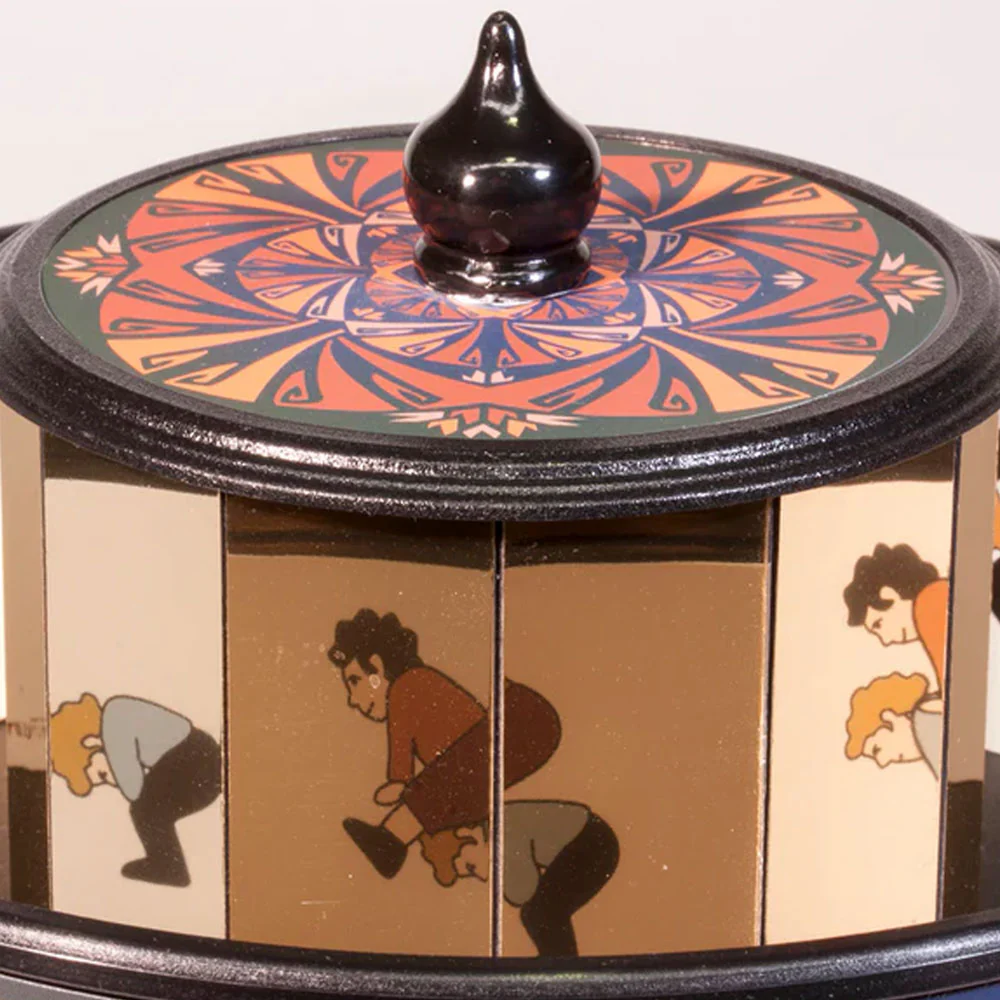
In the zootrope the viewer observes the rotating drum from the rectangular holes arranged on the strip of the sequence of images and in the praxinoscope the viewer sees the animation in the mirrors arranged at angles that reflect the strip of drawings.
Emile Reynaud patented it in 1877. Reynaud's (not "Raynaud"!) contribution made it possible to eliminate the distortion of the vision of moving images caused by the insufficient light received by the images of the Praxinoscope's predecessor: the Zootrope.
What are the main differences between the zootrope and the praxinoscope?
In the zootrope the viewer observes the rotating drum from the rectangular holes arranged on the strip of the sequence of images and in the praxinoscope the viewer sees the animation in the mirrors arranged at angles that reflect the strip of drawings.
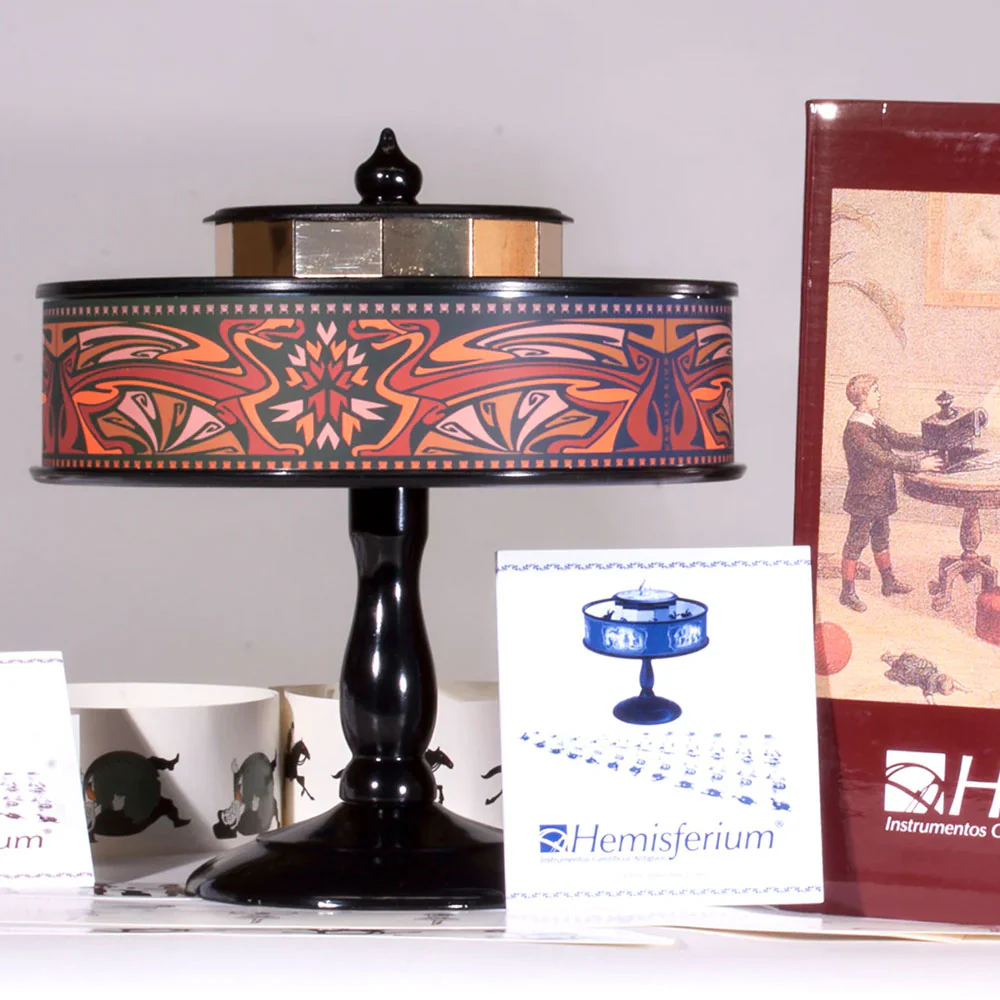
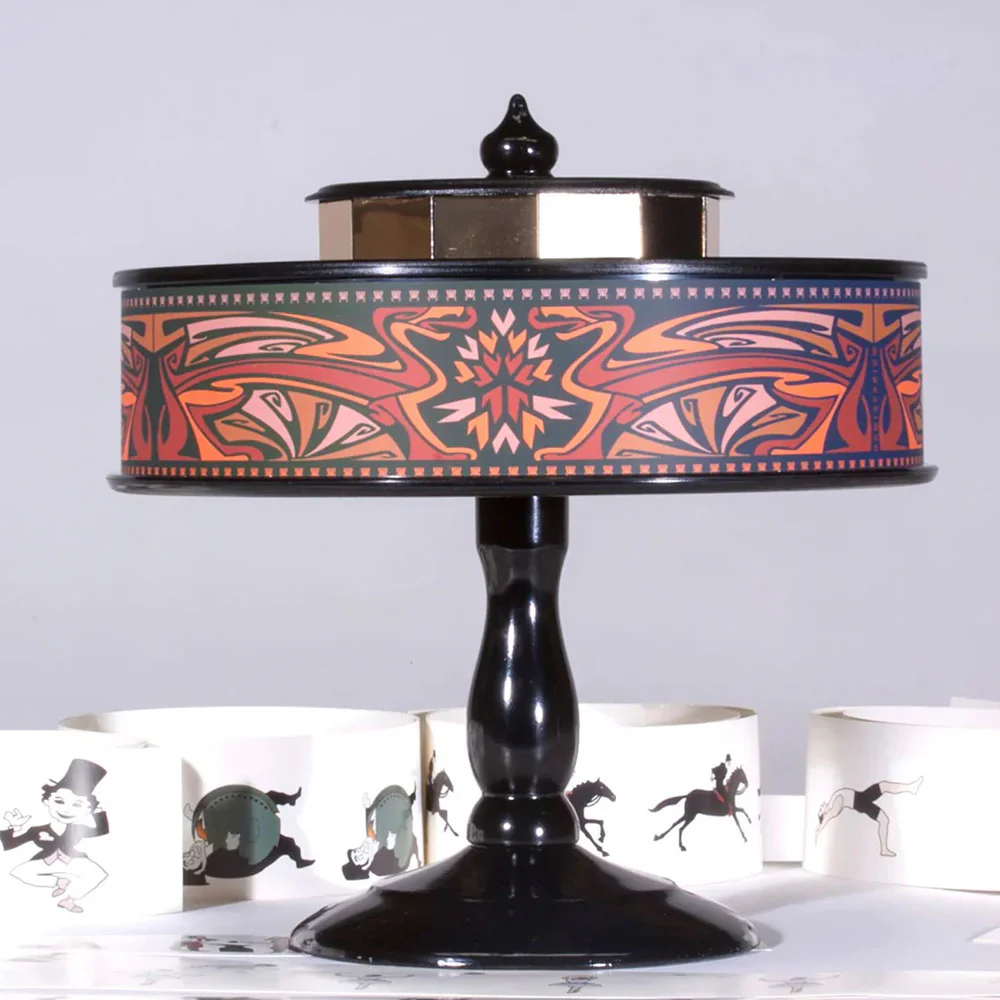
All the pieces are assembled by hand in Madrid. This optical toy, of Classic decoration, consists of a solid metal base, on which the drum with the 12 mirrors that produce the optical illusion, thanks to the reflection of the images, rotates in a smooth and balanced way. With decoration based on traditional images of the Circus of the late nineteenth century, early twentieth century. Includes 20 animated picture strips.
Measurements: Maximum Height: 19.5cm / Diameter: 14.2cm
Product Information
Product Information
Shipping & Returns
Shipping & Returns
MODERNIST PRAXINOSCOPE - BLACK
MODERNIST PRAXINOSCOPE - BLACK
Optical Toy, Praxinoscope Miniature Reproduction - Transforms static images into a moving sequence, thanks to retinal persistence. A circular drum is rotated with mirrors in the centre of the drum reflecting images drawn on strips of paper placed around it. The spectator looks over the instrument and can thus observe an animation of a clear sequence, in which the images merge and the elements come to life.
Who invented the Praxinoscope?
Emile Reynaud patented it in 1877. Reynaud's (not "Raynaud"!) contribution made it possible to eliminate the distortion of the vision of moving images caused by the insufficient light received by the images of the Praxinoscope's predecessor: the Zootrope.
What are the main differences between the zootrope and the praxinoscope?
In the zootrope the viewer observes the rotating drum from the rectangular holes arranged on the strip of the sequence of images and in the praxinoscope the viewer sees the animation in the mirrors arranged at angles that reflect the strip of drawings.
Emile Reynaud patented it in 1877. Reynaud's (not "Raynaud"!) contribution made it possible to eliminate the distortion of the vision of moving images caused by the insufficient light received by the images of the Praxinoscope's predecessor: the Zootrope.
What are the main differences between the zootrope and the praxinoscope?
In the zootrope the viewer observes the rotating drum from the rectangular holes arranged on the strip of the sequence of images and in the praxinoscope the viewer sees the animation in the mirrors arranged at angles that reflect the strip of drawings.
All the pieces are assembled by hand in Madrid. This optical toy, of Classic decoration, consists of a solid metal base, on which the drum with the 12 mirrors that produce the optical illusion, thanks to the reflection of the images, rotates in a smooth and balanced way. With decoration based on traditional images of the Circus of the late nineteenth century, early twentieth century. Includes 20 animated picture strips.
Measurements: Maximum Height: 19.5cm / Diameter: 14.2cm
$32.55
Original: $93.00
-65%MODERNIST PRAXINOSCOPE - BLACK—
$93.00
$32.55Product Information
Product Information
Shipping & Returns
Shipping & Returns
Description
Optical Toy, Praxinoscope Miniature Reproduction - Transforms static images into a moving sequence, thanks to retinal persistence. A circular drum is rotated with mirrors in the centre of the drum reflecting images drawn on strips of paper placed around it. The spectator looks over the instrument and can thus observe an animation of a clear sequence, in which the images merge and the elements come to life.
Who invented the Praxinoscope?
Emile Reynaud patented it in 1877. Reynaud's (not "Raynaud"!) contribution made it possible to eliminate the distortion of the vision of moving images caused by the insufficient light received by the images of the Praxinoscope's predecessor: the Zootrope.
What are the main differences between the zootrope and the praxinoscope?
In the zootrope the viewer observes the rotating drum from the rectangular holes arranged on the strip of the sequence of images and in the praxinoscope the viewer sees the animation in the mirrors arranged at angles that reflect the strip of drawings.
Emile Reynaud patented it in 1877. Reynaud's (not "Raynaud"!) contribution made it possible to eliminate the distortion of the vision of moving images caused by the insufficient light received by the images of the Praxinoscope's predecessor: the Zootrope.
What are the main differences between the zootrope and the praxinoscope?
In the zootrope the viewer observes the rotating drum from the rectangular holes arranged on the strip of the sequence of images and in the praxinoscope the viewer sees the animation in the mirrors arranged at angles that reflect the strip of drawings.
All the pieces are assembled by hand in Madrid. This optical toy, of Classic decoration, consists of a solid metal base, on which the drum with the 12 mirrors that produce the optical illusion, thanks to the reflection of the images, rotates in a smooth and balanced way. With decoration based on traditional images of the Circus of the late nineteenth century, early twentieth century. Includes 20 animated picture strips.
Measurements: Maximum Height: 19.5cm / Diameter: 14.2cm