BROKEN PLATES HEXAGON LINEAR EARRINGS
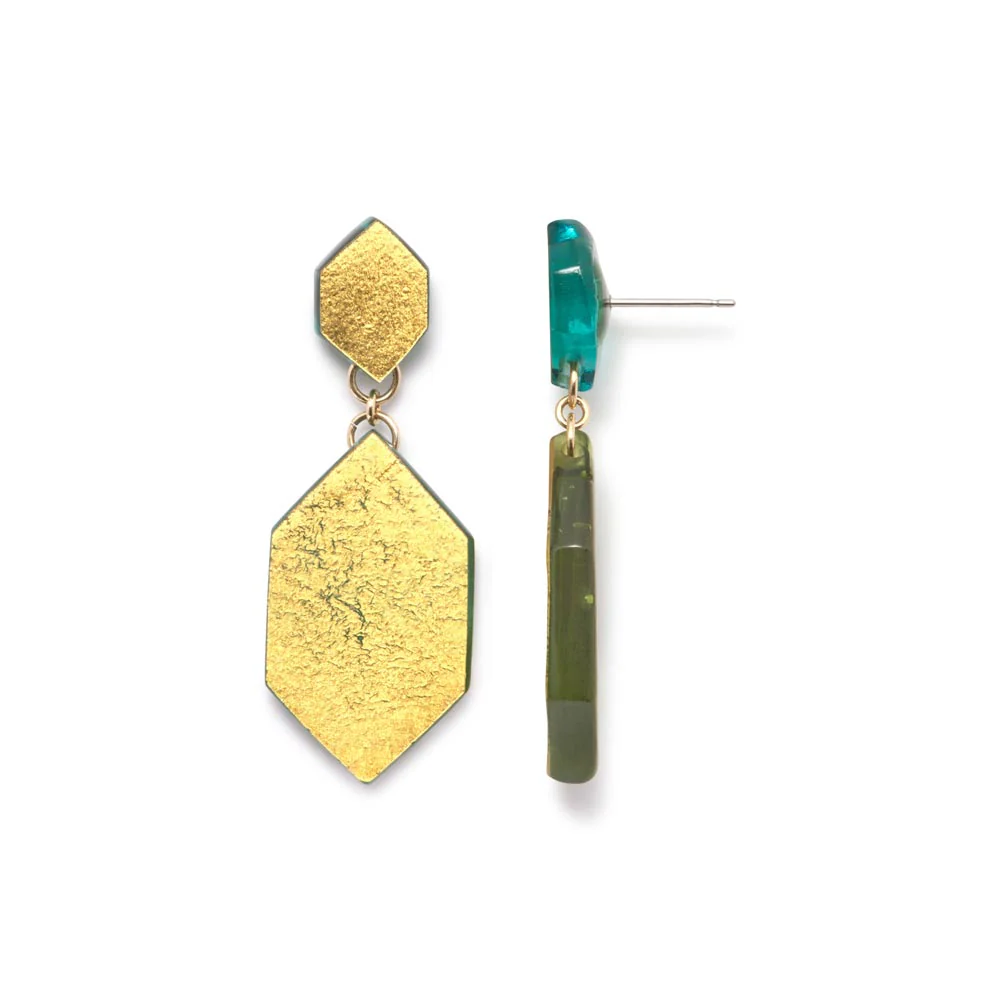
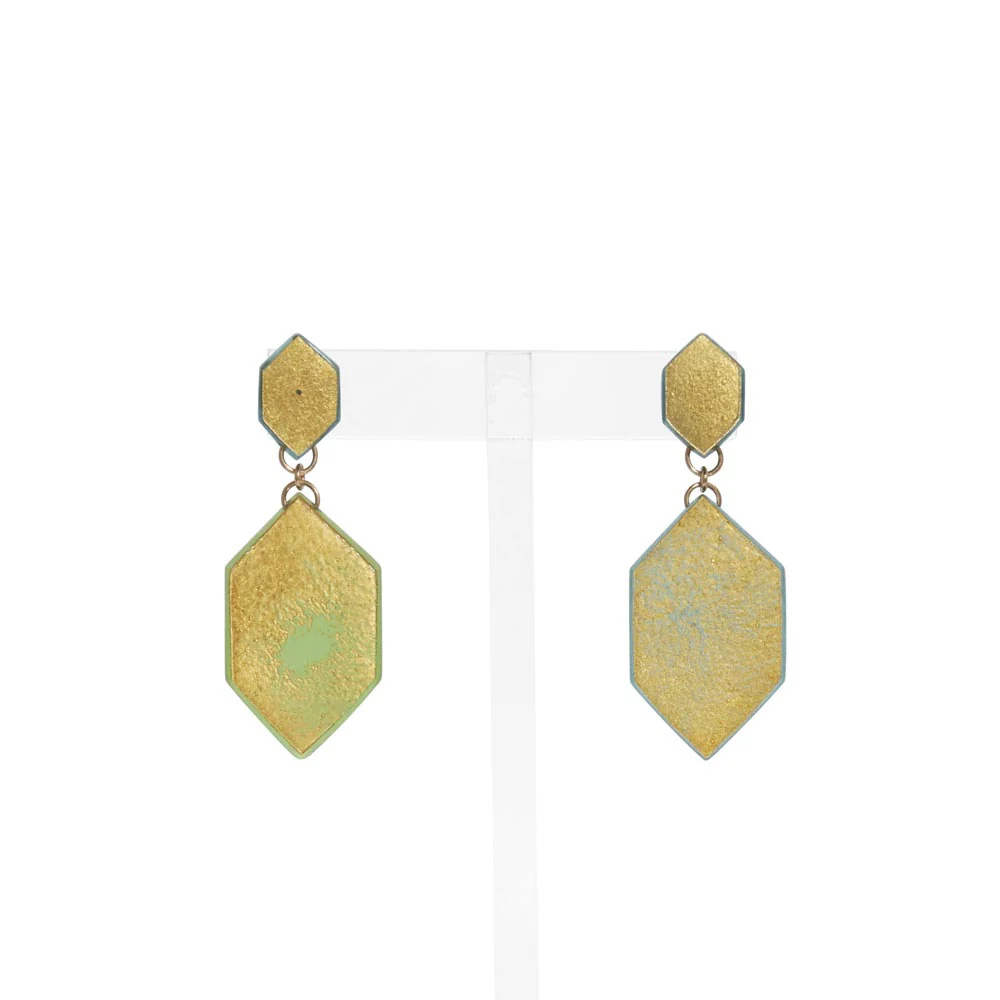
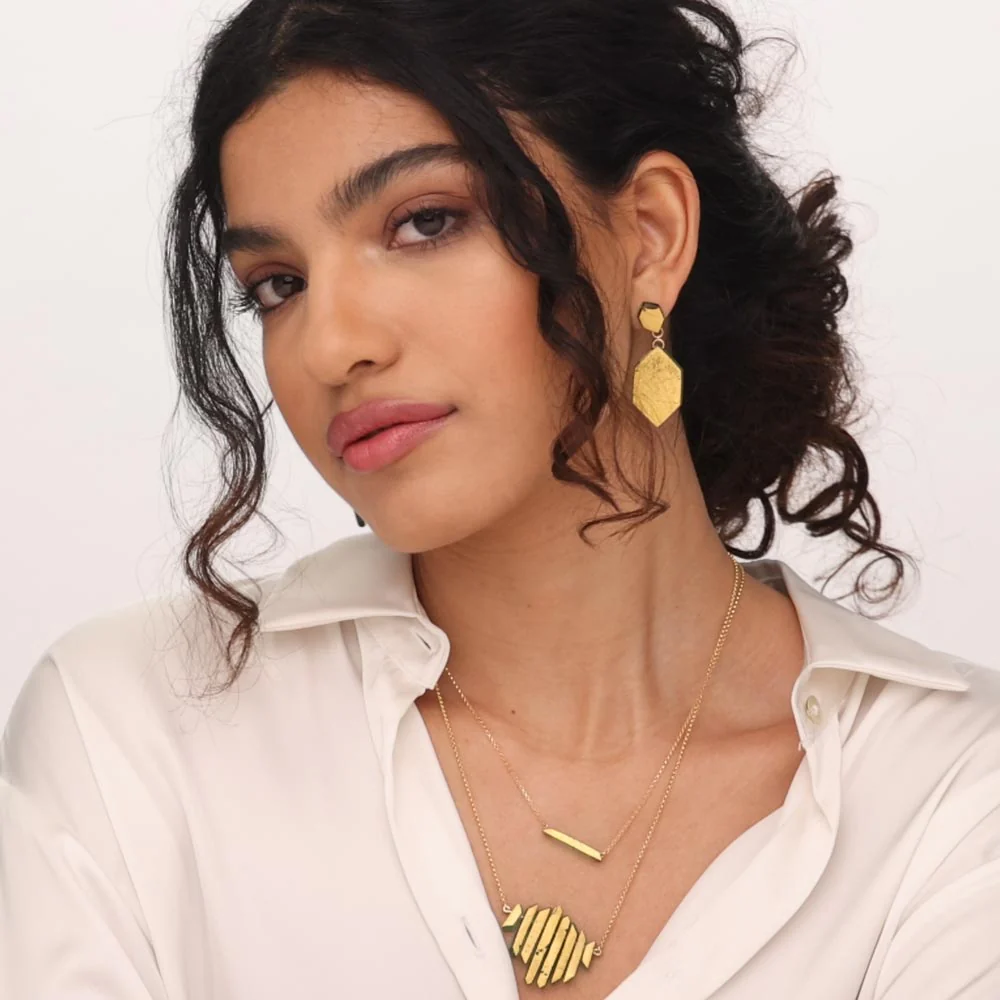
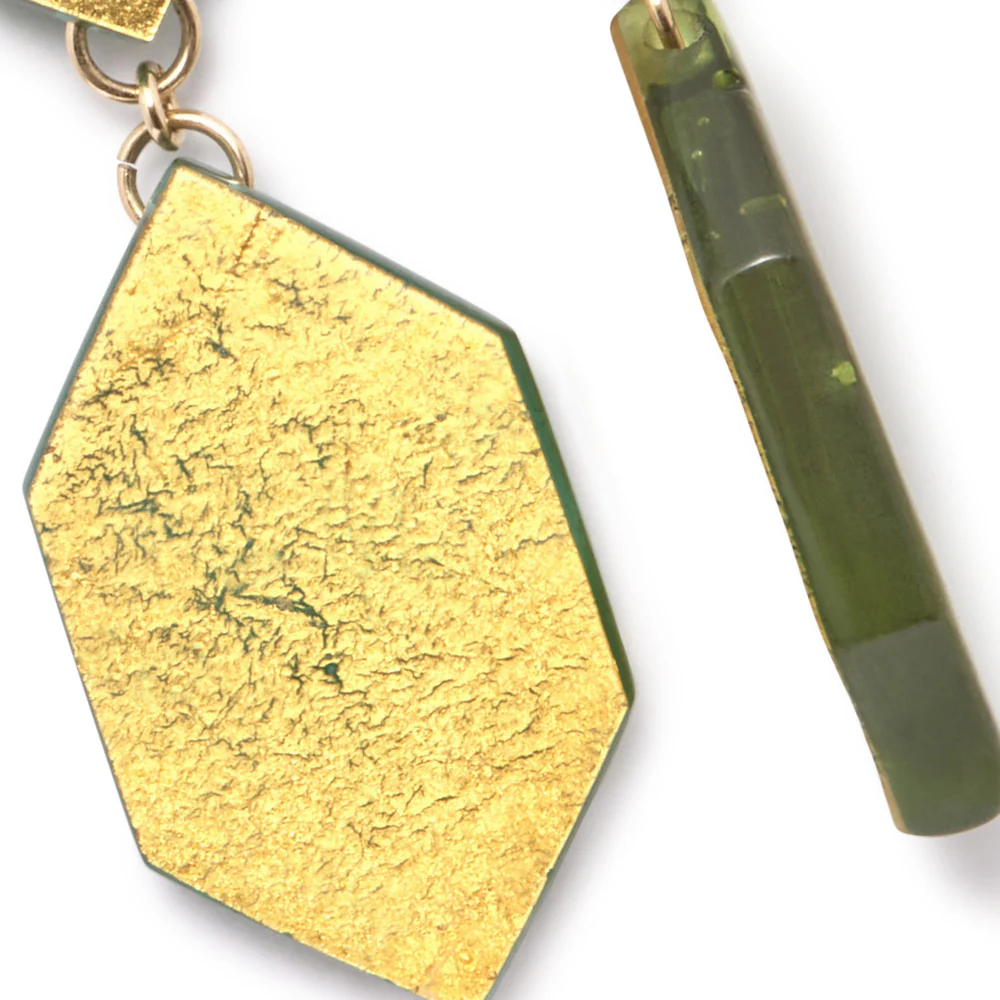
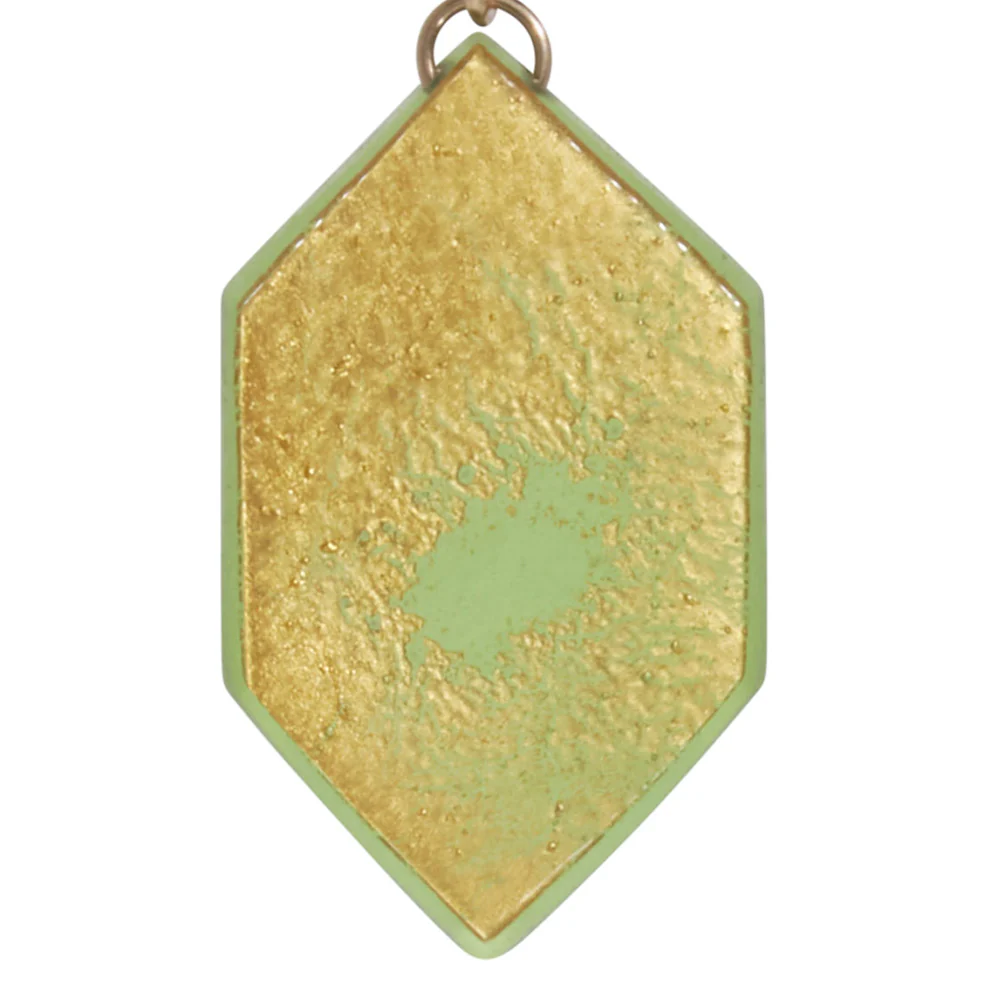
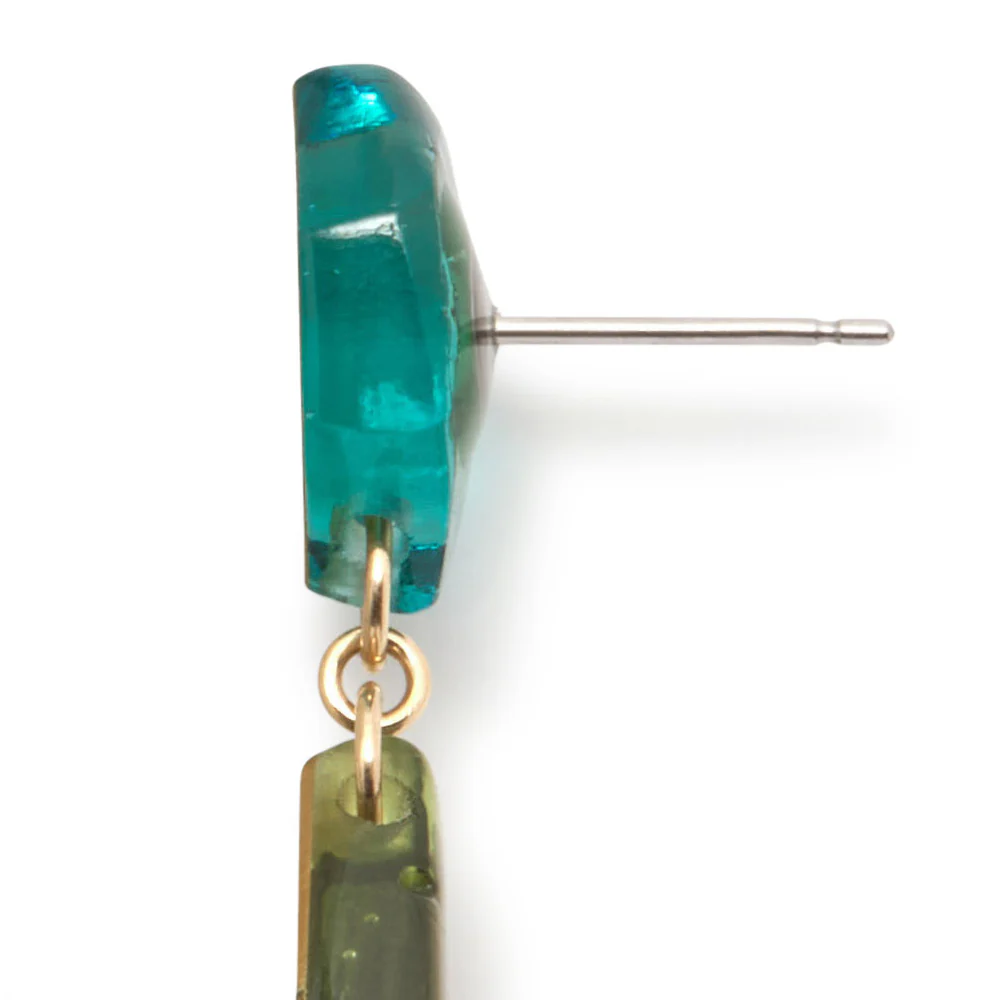
- Gold leaf glass hexagon multi-drop earrings for pierced ears.
- Size varies approximately 1.5in long, .75in wide.
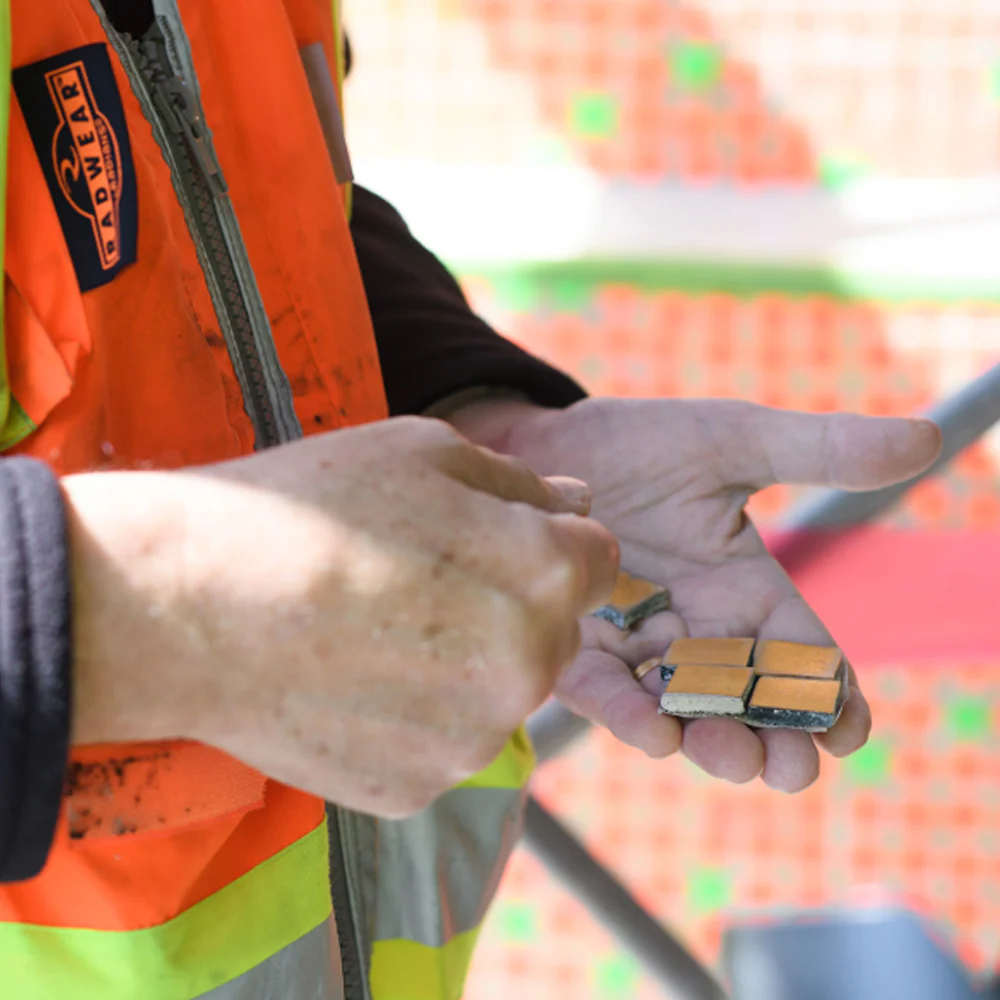
In late 2017, the Academy Museum of Motion Pictures began the detailed process of restoring the 350,000 24-karat gold glass mosaic tiles covering the iconic cylinder of the Saban Building, originally built in 1939. To bring the tiles back to their 1930s glory, the Academy Museum sourced replacements from their original family-owned manufacturer, Orsoni, in Venice, Italy. The tiles that were removed were sent to jewelry designer Jillian Preston to create these one of a kind sustainable jewelry pieces for the Academy Museum Store.
Gillian Preston is a glass artist working out of Pittsburgh, PA, where she creates her line of glass jewelry. Broken Plates is a line of contemporary glass wearables that combines traditional blown glass techniques with modern CNC technologies.
- Some pieces feature dark streaks of copper that went unmixed in the original batch of glass used to make the tiles in the 30s. Copper is used to turn clear glass blue. Pieces where the copper goes unmixed, appear greener in color. These streaks allow us to remember that these tiles were made by hand.
- You may see more blue glass peeking through some tiles vs. others. This is evidence of greater wear on the glass over time. We chose to celebrate the resulting textures and patterns this created by featuring those pieces prominently.
To remove the original building materials from the tiles, Broken Plates used diamond coated grinders followed by a light sandblasting of the surface to make sure all non-glass materials were removed, taking care to protect the gold leaf on the surface. Each piece was then cut into shape. At this point, the surface of the gold leafed glass appeared matte in finish. To return it to its original glassy shine, we worked to calculate its melting temperature through a series of test firings in our kiln. Finding the exact temperature at which the glass starts to melt allowed us to bring the deep blues and greens of the 1930s glass back to life while also restoring the original gold leaf to a high polish.
Product Information
Product Information
Shipping & Returns
Shipping & Returns

BROKEN PLATES HEXAGON LINEAR EARRINGS
BROKEN PLATES HEXAGON LINEAR EARRINGS
- Gold leaf glass hexagon multi-drop earrings for pierced ears.
- Size varies approximately 1.5in long, .75in wide.
In late 2017, the Academy Museum of Motion Pictures began the detailed process of restoring the 350,000 24-karat gold glass mosaic tiles covering the iconic cylinder of the Saban Building, originally built in 1939. To bring the tiles back to their 1930s glory, the Academy Museum sourced replacements from their original family-owned manufacturer, Orsoni, in Venice, Italy. The tiles that were removed were sent to jewelry designer Jillian Preston to create these one of a kind sustainable jewelry pieces for the Academy Museum Store.
Gillian Preston is a glass artist working out of Pittsburgh, PA, where she creates her line of glass jewelry. Broken Plates is a line of contemporary glass wearables that combines traditional blown glass techniques with modern CNC technologies.
- Some pieces feature dark streaks of copper that went unmixed in the original batch of glass used to make the tiles in the 30s. Copper is used to turn clear glass blue. Pieces where the copper goes unmixed, appear greener in color. These streaks allow us to remember that these tiles were made by hand.
- You may see more blue glass peeking through some tiles vs. others. This is evidence of greater wear on the glass over time. We chose to celebrate the resulting textures and patterns this created by featuring those pieces prominently.
To remove the original building materials from the tiles, Broken Plates used diamond coated grinders followed by a light sandblasting of the surface to make sure all non-glass materials were removed, taking care to protect the gold leaf on the surface. Each piece was then cut into shape. At this point, the surface of the gold leafed glass appeared matte in finish. To return it to its original glassy shine, we worked to calculate its melting temperature through a series of test firings in our kiln. Finding the exact temperature at which the glass starts to melt allowed us to bring the deep blues and greens of the 1930s glass back to life while also restoring the original gold leaf to a high polish.
Original: $130.00
-65%$130.00
$45.50Product Information
Product Information
Shipping & Returns
Shipping & Returns
Description
- Gold leaf glass hexagon multi-drop earrings for pierced ears.
- Size varies approximately 1.5in long, .75in wide.
In late 2017, the Academy Museum of Motion Pictures began the detailed process of restoring the 350,000 24-karat gold glass mosaic tiles covering the iconic cylinder of the Saban Building, originally built in 1939. To bring the tiles back to their 1930s glory, the Academy Museum sourced replacements from their original family-owned manufacturer, Orsoni, in Venice, Italy. The tiles that were removed were sent to jewelry designer Jillian Preston to create these one of a kind sustainable jewelry pieces for the Academy Museum Store.
Gillian Preston is a glass artist working out of Pittsburgh, PA, where she creates her line of glass jewelry. Broken Plates is a line of contemporary glass wearables that combines traditional blown glass techniques with modern CNC technologies.
- Some pieces feature dark streaks of copper that went unmixed in the original batch of glass used to make the tiles in the 30s. Copper is used to turn clear glass blue. Pieces where the copper goes unmixed, appear greener in color. These streaks allow us to remember that these tiles were made by hand.
- You may see more blue glass peeking through some tiles vs. others. This is evidence of greater wear on the glass over time. We chose to celebrate the resulting textures and patterns this created by featuring those pieces prominently.
To remove the original building materials from the tiles, Broken Plates used diamond coated grinders followed by a light sandblasting of the surface to make sure all non-glass materials were removed, taking care to protect the gold leaf on the surface. Each piece was then cut into shape. At this point, the surface of the gold leafed glass appeared matte in finish. To return it to its original glassy shine, we worked to calculate its melting temperature through a series of test firings in our kiln. Finding the exact temperature at which the glass starts to melt allowed us to bring the deep blues and greens of the 1930s glass back to life while also restoring the original gold leaf to a high polish.